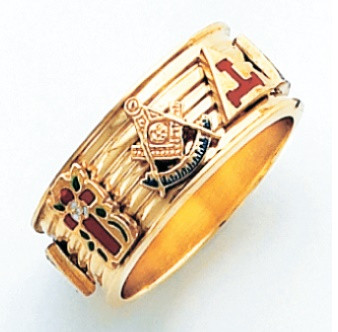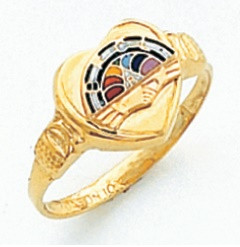
After the Blue Lodge, many Master Masons join the Scottish Rite, the York Rite or both, and their rings often change to reflect it. This guide covers the Masonic rings associated with the two great Rites, what the emblems mean and how they are worn.
Scottish Rite rings
The 14th degree ring. Members who receive the 14th degree in the Lodge of Perfection traditionally receive or acquire a plain band, often gold, with an inscription inside. It is one of the best-known Masonic rings and is usually worn on the left hand.
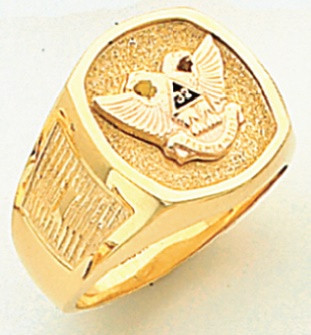
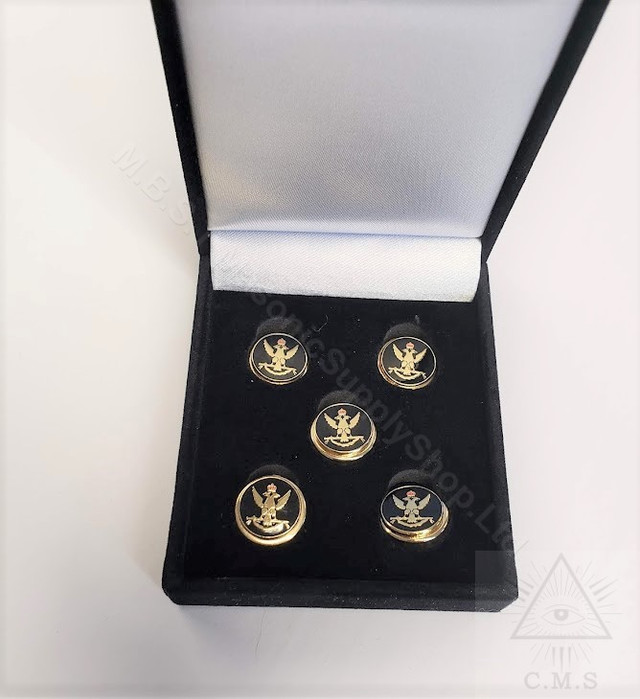
32nd degree rings. These feature the double-headed eagle, frequently with the number 32, sometimes set on a coloured stone.
33rd degree rings. Worn by members who have received the honorary 33rd degree, often a distinctive band or emblem ring according to the jurisdiction's custom.
Our page on Scottish Rite rings covers these in more detail.
York Rite rings
- Royal Arch rings carry the keystone or triple tau.
- Cryptic Council rings may show the triangle with trowel and sword.
- Knight Templar rings carry the cross and crown, often on a red stone.
- Combined York Rite rings show the emblems of Chapter, Council and Commandery together, popular with Masons who have completed all three.
Combination rings
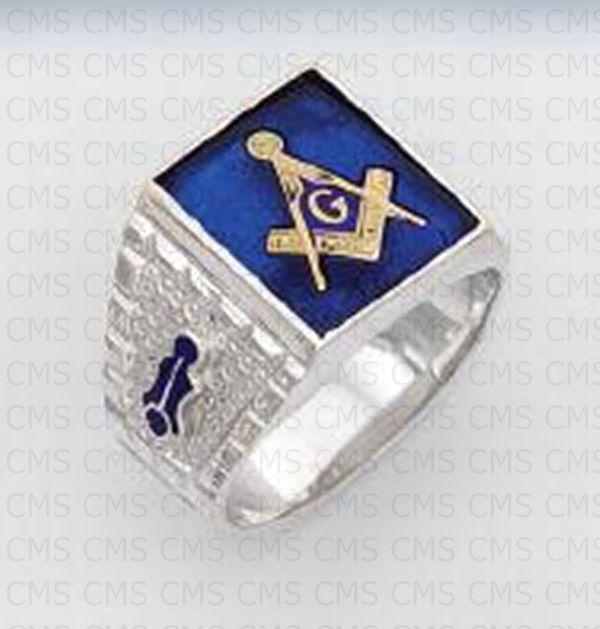
Many Masons belong to both Rites and choose a ring that shows the Square and Compasses on top with Scottish Rite and York Rite emblems on the sides. These tell a Brother's whole Masonic journey in one ring.
Choosing a Rite ring
- Wear only emblems you have earned. A 32nd degree or Templar ring is for members of those bodies.
- Check your jurisdiction's customs, especially for 14th and 33rd degree rings.
- Consider daily wear. Recessed emblems and durable metals last longer on a ring worn at work.
- Size carefully. Wide Rite rings fit more snugly than wedding bands.
Rings as gifts
Families and bodies often present a ring when a Brother receives the 32nd degree or is knighted in the Commandery. Confirm which bodies he belongs to before buying.
Choosing between a Scottish Rite and York Rite ring
Members of both Rites often choose one ring that reflects the body they are most active in, or a combination design. Think about which emblem you want others to see first, whether you'd wear it daily, and whether a later honour such as the 33rd degree might lead you to replace it. A plain double-headed eagle or a simple keystone ages well.
Ring sizing and fit
Signet-style Masonic rings are wider than wedding bands and may need a half size larger. Have your finger measured at the end of the day, when fingers are slightly larger, and allow for knuckle size.
Wearing etiquette
Customs vary, but many members wear an appendant body ring on the right hand and a Blue Lodge ring on the left, or wear only one at a time. There is no universal rule; follow the custom of your own Valley or Commandery.
Where to buy Masonic rings
Masonic Supply Shop is owned and operated by Freemasons. See its Scottish Rite range or ask the team about particular Rite rings.
FAQ
Can I wear my Scottish Rite ring in my Blue Lodge?
Rings are personal jewellery and are generally acceptable, but check your Grand Lodge's customs.
What does the inscription in a 14th degree ring say?
It is traditionally a Latin motto associated with the degree; members learn its meaning in the Lodge of Perfection.
Can I wear more than one Masonic ring?
Many Masons do, often one on each hand, or choose a combination ring.
Are Rite rings the same in Canada and the US?
Core emblems are shared, but customs and degree structures differ between jurisdictions.